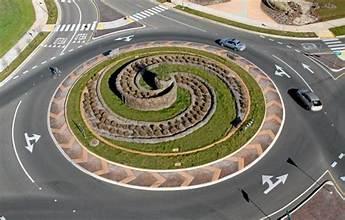
Do people love or hate the Chico round abouts?
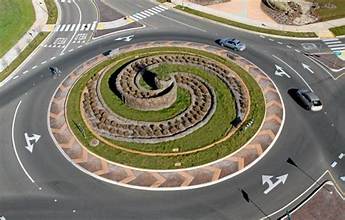
Roundabouts in Chico: Do You Love Them or Hate Them?
If you've been driving around Chico lately, you've probably noticed something that is becoming increasingly common: roundabouts.
For decades, most Chico drivers were accustomed to the traditional intersection—stop signs, traffic signals, turn lanes and the familiar routine of waiting for the light to turn green. But as Chico continues to grow and traffic patterns change, roundabouts are becoming a more noticeable part of our local road system.
And they certainly generate opinions.
Some Chico residents love them. Others tolerate them. And some drivers would probably be perfectly happy if they never encountered another roundabout again.
So, are roundabouts actually better and safer, or are they simply making driving more confusing?
Roundabouts Aren't New—Just Newer to Many Americans
While roundabouts may still seem relatively new to many American drivers, circular intersections have been used extensively in Europe and other parts of the world for decades.
The modern roundabout is different from some of the older, larger traffic circles people may remember. Modern roundabouts are generally designed to slow vehicles as they enter, establish a predictable direction of travel and keep traffic moving without requiring every vehicle to come to a complete stop.
For drivers who grew up using them, navigating a roundabout can seem completely natural. For someone encountering one for the first time, however, the reaction can be quite different.
"Who has the right-of-way?"
"Which lane should I be in?"
"Do I stop before entering?"
"When do I signal?"
Those questions can make an unfamiliar driver nervous.
Why Are We Seeing More Roundabouts?
One reason communities use roundabouts is traffic flow.
At a traditional stop-sign intersection, every vehicle may have to stop even when there isn't another car anywhere nearby. At a traffic signal, drivers can sit at a red light while there is little or no traffic traveling in the opposite direction.
A properly designed roundabout allows vehicles to slow down, yield to traffic already circulating and continue through when it's safe.
That can reduce unnecessary stopping and waiting.
Roundabouts can also reduce certain types of serious collisions. Traditional intersections create opportunities for vehicles traveling in opposite directions to cross paths at relatively high speeds. With a roundabout, traffic generally moves in the same direction and at lower speeds.
That doesn't mean accidents can't happen. They certainly can. But slower vehicle speeds can make a significant difference in the severity of a collision.
The Biggest Problem May Be Learning How to Use Them
Roundabouts can work extremely well—when everyone understands what they're supposed to do.
That's where some of the frustration begins.
One driver approaches confidently and knows exactly when to yield. Another driver stops unnecessarily when there is no traffic coming. Someone else enters without yielding. Another driver may suddenly change lanes.
Now everybody is wondering what everybody else is going to do.
The basic idea, however, is relatively simple: slow down as you approach, watch for pedestrians and bicycles, yield to vehicles already in the roundabout, enter when there is a safe opening and follow the signs and lane markings to your exit.
The more often people use roundabouts, the more natural the process becomes.
Think about learning to drive on a freeway. The first few times you merged into traffic at 65 miles per hour, it may have seemed intimidating. After doing it hundreds of times, most drivers don't give it much thought.
Roundabouts may eventually become the same way.
What About Drivers Who Are Afraid of Them?
This is an important part of the conversation, particularly in a community like Chico with drivers of every age and experience level.
Some people are genuinely uncomfortable approaching a busy roundabout. They may worry about finding an opening, choosing the correct lane or having enough time to react.
That shouldn't simply be dismissed.
Good road design should be understandable and predictable for as many people as possible.
Clear signs, visible pavement markings, proper lighting and thoughtful design can make an enormous difference. Public education can help as well.
And experience matters.
After traveling through the same roundabout repeatedly, what initially seemed confusing can become routine.
Roundabouts and Chico's Bicycles and Pedestrians
Chico also has another important consideration: we are a bicycle town.
Between Chico State students, recreational cyclists, commuters and people simply riding around town, bicycles are a regular part of Chico traffic.
Roundabouts therefore need to work not only for automobiles but also for bicyclists and pedestrians.
Drivers should always slow down and watch carefully for pedestrians and cyclists around crossings. Likewise, cyclists and pedestrians need to understand how a particular roundabout is designed and follow the appropriate markings and crossings.
A roundabout that works beautifully for cars but creates uncertainty for pedestrians or cyclists isn't accomplishing everything it should.
Not Every Intersection Is the Same
Roundabouts aren't necessarily the perfect solution for every intersection.
Traffic volume, road width, pedestrian activity, bicycle use, nearby businesses and the amount of available land can all affect whether a roundabout makes sense.
There may be locations where a traditional signal works better.
There may be other intersections where a roundabout dramatically improves traffic flow.
The key is putting the right solution in the right location.
That's probably why people's opinions about roundabouts can vary so much. Someone may love one particular roundabout because it eliminated a frustrating stop and keeps traffic moving. The same person might dislike another one because the layout feels too tight, too busy or confusing.
There Are Some Real Advantages
When they're properly designed and drivers understand them, roundabouts offer some attractive benefits.
Traffic can continue moving instead of repeatedly stopping and starting. Lower speeds through the intersection can improve safety. Fewer long waits can reduce driver frustration. Eliminating some traffic signals can also reduce the need for signal equipment and electricity.
And there's another small benefit we sometimes overlook: appearance.
The center of a roundabout can provide an opportunity for attractive landscaping or other visual improvements that help create a sense of place within a neighborhood.
Chico Is Changing—and So Are Our Roads
Chico isn't the same community it was 30 or 40 years ago.
We have new neighborhoods, more vehicles, changing commuting patterns and continued development throughout different parts of town. Our transportation system has to evolve along with the community.
Roundabouts appear to be part of that evolution.
There will undoubtedly be a learning curve, particularly as drivers encounter more multi-lane or unfamiliar roundabouts. But if the experience in other communities and countries is any indication, what seems strange today may eventually become completely ordinary.
The real question may not be whether roundabouts are coming to Chico.
They're already here.
The more interesting question is:
What do you think?
Do roundabouts make Chico traffic safer and easier? Do you prefer them to stop signs and traffic lights? Or would you rather see Chico stick with traditional intersections?
Roundabouts may keep traffic moving—but when it comes to Chico drivers, they definitely keep the conversation going
